
ANDREW - THE TECHNICAL LEAD
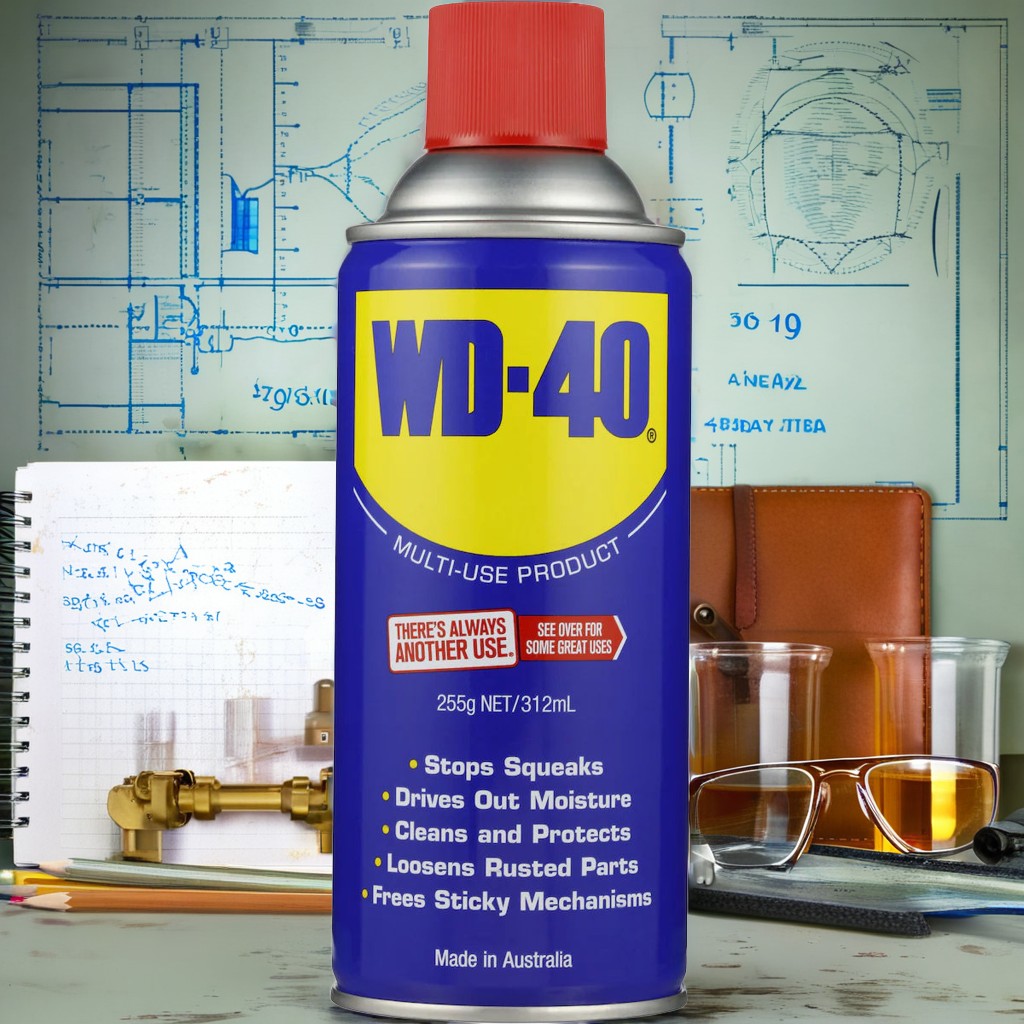
There is a can of WD-40 in every garage in the western world. Blue body, yellow cap, the small red straw clipped to the side. The design has not changed since 1958. The smell is unmistakable. The product does what it says, every time, for as long as the can remains sealed. Most men have used WD-40 at some point in the last fortnight. Very few of them know what it is, or what it was originally designed to do, or that the formula they sprayed onto a stiff hinge was the fortieth attempt at solving a problem that had nothing to do with hinges.
The Atlas Missile
In 1953, a small chemical company in San Diego called the Rocket Chemical Company was contracted by Convair to solve a specific problem on the Atlas missile program. The Atlas was the first American intercontinental ballistic missile, a slender steel airframe that needed to sit fuelled and ready in silos across the American Midwest, and the steel skin of the missile was corroding. Moisture was the enemy. The contract was simple. Develop a substance that would displace water from the metal surface and prevent rust during long periods of storage.
A young chemist named Norm Larsen took the project. He worked through formulation after formulation, each one missing the target in a slightly different way. Some displaced water but evaporated too quickly. Some prevented rust but corroded the steel underneath. Some did both but smelled like an industrial accident. Each attempt was logged, refined, discarded. Thirty-nine of them, one after another, all variations on a problem that refused to be solved.
The fortieth attempt worked. Water displacement, fortieth formula. WD-40. The product was sealed inside the Atlas missile silos and the company moved on.
What Persistence Actually Looks Like
The persistence in the WD-40 story is not romantic. It is methodical. There is no dramatic moment, no breakthrough at midnight, no scientist throwing his notebook across the room before realising the answer was on the previous page. There is just a man in a laboratory, week after week, trying the next thing. Logging the result. Trying the next thing. The formula did not arrive. It was built.
This is the part of engineering that does not make the documentaries. The thirty-nine failures are not stops on the road to success, they are the road itself. Each one taught Larsen something specific about the chemistry he was working with. The fortieth formula was not a guess, it was the accumulated knowledge of the previous thirty-nine compressed into a single working solution. The story is often told as if number forty was the lucky one. It was not. It was the only one that could have worked, given what the previous thirty-nine had revealed.
What Mid-Century American Engineering Believed
WD-40 belongs to a particular moment in American industrial history. The same decade that produced the Atlas missile produced the Boeing 707, the Corvette, the Chrysler 300C, the Polaroid camera, the long-playing record. Each of these objects was designed with the assumption that the problem could be solved, and that solving it would take time, money, and a hundred quiet attempts in workshops no one would ever photograph. The result was a wave of products that still work, sixty years later, because they were built by people who refused to ship them until they did.
There is no equivalent in 2026 to a chemist working for five years on a single product nobody has heard of. The current model is iterate fast, ship often, gather data, adjust. This is, in many ways, an improvement. It is also, in some ways, a loss. The WD-40 can on the shelf is the artefact of a method of working that prioritised getting it right over getting it out. The persistence is in the can.
The Quiet Authority of Things That Work
A small product that solves a specific problem, and continues to solve it without modification for seven decades, accumulates a particular kind of authority. It does not need marketing. It does not need a brand refresh. It does not need to be reinvented because there was nothing wrong with it in the first place. The can on the garage shelf is a small monument to the principle that some problems only need to be solved once, if they are solved properly.
There is a useful lesson in the can for any man past fifty. The accumulated weight of doing one thing well, repeatedly, over years, without changing the answer when the answer was right the first time, is a kind of quiet authority that nothing else in life can substitute for. The hinge stops squeaking. The lock turns smoothly. The bicycle chain moves. Nothing has been promised. Everything has been delivered.
Norm Larsen died in 1970, twelve years after the formula he developed reached the consumer market. He had moved on to other projects long before WD-40 became the household name it is now. He never owned shares in the company. The product that made his name was, by the time anyone outside the laboratory cared about it, a small chapter in a working life. He did the work and the work continued without him. There is something correct about that.
The next time the can comes off the shelf, it is worth a small acknowledgement. Thirty-nine failures, one fortieth attempt, sixty-eight years of quiet utility. The hinge moves. The lock turns. The work was done.