
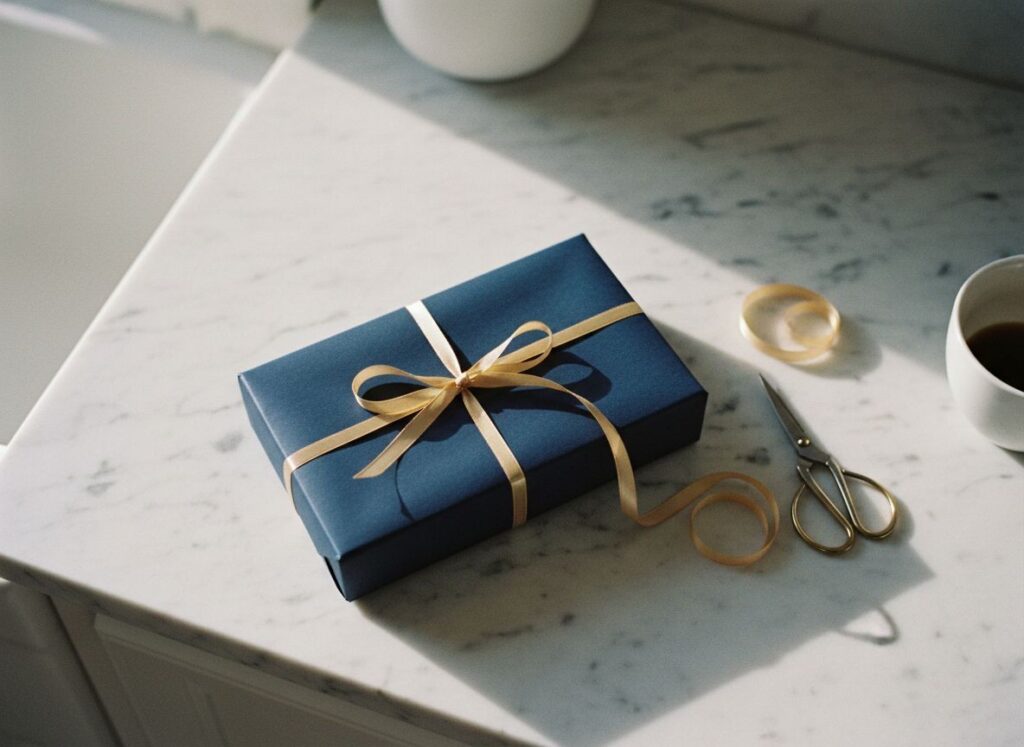
I have watched a particular drawer in a particular bedside table fill up over twenty years. The cufflinks his mother gave him in 2003. The leather card holder from a corporate Christmas. The cologne his brother bought duty free. The watch winder that has never wound a watch. The gifts arrived. The drawer received them. Nothing in it has ever been used.
Women buy badly for men in a specific way. We buy what we think a man should want. He should want a nice fountain pen. He should want a monogrammed wash bag. He should want the upgraded version of something he already owns and is perfectly happy with. The gift becomes a small statement about who we think he is, or who we wish he were, rather than who he actually is.
Men in their fifties and sixties have, by this point, acquired most of what they want and almost none of what they need. The wallet works. The watch works. The cologne is the one he has been wearing since 1998 and he is not going to change it because you bought him something more interesting at David Jones.
The gifts that get used are small and specific. A second charging cable for the car so he stops moving the one from the kitchen. The exact pair of socks he already owns, in a fresh six pack, because he will not buy them himself. A torch that lives in the glovebox. The book his friend recommended at dinner that he meant to order and forgot. A bottle of the whisky he already drinks. The expensive version of the thing he uses every day, never the cheap version of something aspirational.
Notice the pattern. The gifts that work replace, repair, or quietly upgrade something he already lives with. The gifts that fail introduce something new he did not ask for.
The man who has everything wants nothing decorative. He does not need an ornament for his desk. He does not need a leather journal he will never write in. He does not need a candle that smells like a forest in Norway. He has reached the age where adding objects to his life feels like work, not pleasure.
What he wants is the small frictions of his daily life removed by someone who was paying attention. The torch he keeps forgetting to replace. The second umbrella so the car always has one. The fresh socks. The cable. The replacement charging brick because the old one has been chewed by something.
This is not romantic gift advice. This is observed behaviour over decades. Watch a man unwrap a new pair of socks he actually wears and a beautifully presented monogrammed cufflink box on the same morning. The socks get put away with the others. The cufflinks go in the drawer.
The husband who has everything wants nothing decorative. He wants the small frictions of his daily life removed by someone who was paying attention. That is the gift. Attention is the gift. The object is just the receipt.