
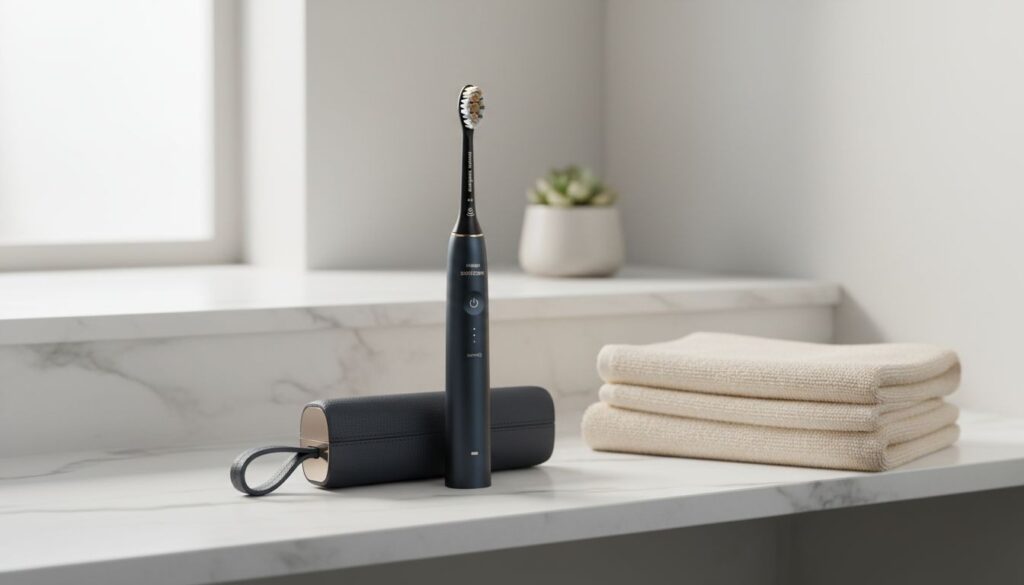
Gary - The Curator reviews the details that constitute a considered appearance.
The Silver Fox Verdict
Your dentist has been telling you for twenty years. The Sonicare 9900 Prestige is what finally makes the advice worth taking.
Grooming begins before the mirror. The skin, the teeth, the breath - these are the things people notice before they notice anything you are wearing. Most men over 50 have spent decades on the visible elements and comparatively little on the foundation.
A sonic toothbrush is not a luxury. It is the correction of a technique problem. Manual brushing, regardless of effort, misses a significant portion of tooth surfaces consistently. Sonic vibration at 62,000 brush movements per minute does not miss those surfaces. The clinical difference is meaningful.
What Makes the 9900 Prestige Different
Philips makes several Sonicare models. The 9900 Prestige sits at the top of the range for one reason that matters: SenseIQ adaptive technology. The brush head reads your brushing pressure, speed, and coverage in real time and adjusts the intensity automatically.
This eliminates the two most common brushing errors - too much pressure and uneven coverage. Both contribute to gum recession and enamel wear over time. The 9900 Prestige corrects both without requiring you to think about it.
The Brush Head
The Premium All-in-One brush head combines three brushing actions simultaneously: sonic vibration, pulsation, and oscillation. It reaches two millimetres below the gumline - the clinical threshold for effective plaque removal in the sulcus.
Replacement heads are required every three months. A worn head removes significantly less plaque than a new one. This is not optional.
Pressure Sensor
The 9900 Prestige includes a real-time pressure sensor that alerts when you are pressing too hard. Over-brushing is as damaging as under-brushing - gum recession from excessive pressure is common and largely irreversible. The alert is standard and cannot be disabled. This is the correct design decision.
The App
A companion app connects via Bluetooth and maps coverage across all quadrants. If you want the data it is available. If you do not, the brush works without the app. The app does not gate any brushing functionality.
Charging
The travel case charges the brush wirelessly and can itself be charged via USB-C. A full charge lasts approximately three weeks of twice-daily use. The travel case holds two additional charges - a meaningful design decision for anyone who travels regularly.
The Professional Choice
9900 Prestige in Serene White with the Premium All-in-One brush head. The standard configuration. Nothing needs to be added.
The Value Choice
9900 Prestige in Midnight Blue. Identical internally. Frequently available at a modest discount through authorised retailers during promotional periods.
What It Does Not Do
It does not whiten teeth. Sonic vibration removes surface stain more effectively than manual brushing but it is not a whitening treatment. That is a separate product category.
Specifications
| Specification | Detail |
|---|---|
| Brush movements | 62,000 per minute |
| Modes | 3 (Clean, White+, Gum Care) |
| Intensities | 3 per mode |
| Pressure sensor | Yes, real-time |
| SenseIQ | Yes |
| Battery life | Up to 3 weeks |
| Charging | USB-C travel case |
| Travel case charges | 2 additional charges |
| Warranty | 2 years |
Comparison
| Toothbrush | Sonic | Pressure Sensor | Adaptive Tech |
|---|---|---|---|
| Philips Sonicare 9900 Prestige | Yes | Yes | SenseIQ |
| Oral-B iO Series 9 | Oscillating | Yes | AI tracking |
| Philips Sonicare 7300 | Yes | Yes | No |
| Oral-B Pro 3000 | Oscillating | Yes | No |
Gary's note: The Oral-B iO Series 9 is the direct competitor. It uses oscillating rather than sonic technology - both are clinically effective. The iO9 provides more granular app feedback. The Sonicare 9900 is quieter and the pressure adaptation is more natural in use. Both are correct answers at this price point. The Sonicare wins on travel case and adaptive intensity.
Frequently Asked Questions
Is an electric toothbrush actually better than manual?
Clinically yes. Studies consistently show sonic and oscillating electric toothbrushes remove more plaque and reduce gingivitis more effectively than manual brushing. The margin is not small.
How often should I replace the brush head?
Every three months, or sooner if the bristles show visible wear. Replacement heads are available in multi-packs. Set a calendar reminder.
Does the pressure sensor matter?
Yes. Gum recession from over-brushing is one of the most common dental issues in men over 50 and is largely irreversible. The sensor corrects the behaviour before damage occurs.
Is the app required?
No. The brush functions fully without the app. The app adds coverage mapping if you want the data.
What is the difference between the 9900 Prestige and the 9300?
SenseIQ adaptive technology and the travel case with USB-C charging. If travel is not a factor and adaptive intensity is not a priority, the 9300 is a sound alternative.
Silver Fox Field Note
You have been doing it wrong for decades. This corrects that. Two minutes, twice a day. No further discussion required.
Join The Edit
Weekly recommendations on gear, style and health for men who know what they want. Free when you subscribe.