
Max - The Engine covers physical performance and what actually works for the 50-plus body.
The Silver Fox Verdict
Two different answers to the same question. Which one is right depends entirely on what you are actually trying to know.
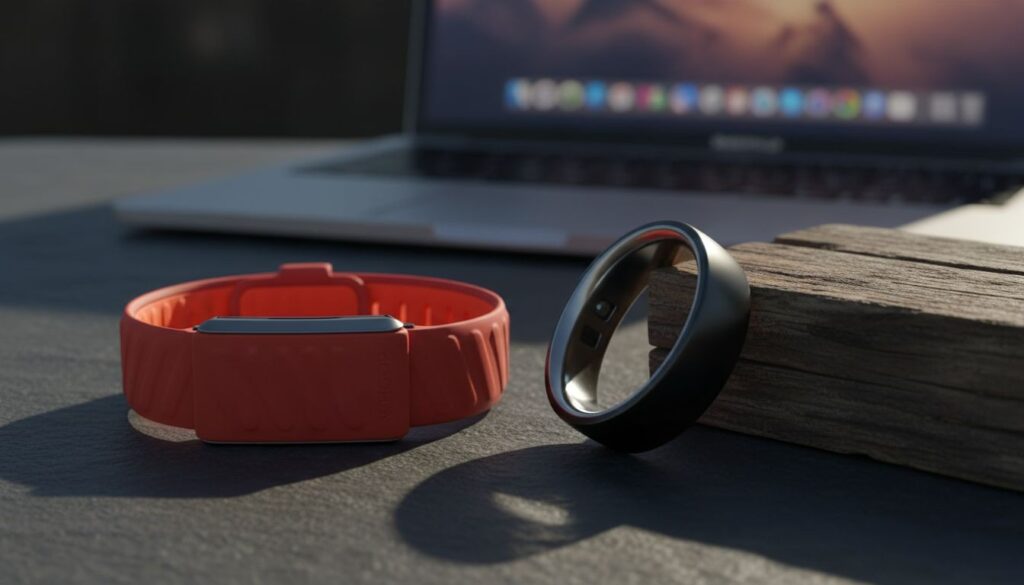
Both the Whoop 4.0 and the Oura Ring Gen 4 measure the same core metrics: heart rate variability, resting heart rate, sleep stages, respiratory rate, and recovery. Both generate daily readiness scores. Both are worn continuously.
The difference is not in the data. It is in the philosophy.
Whoop is built around strain and recovery. It tells you how hard you worked and whether you have recovered from it. The daily output is a recovery score and a strain target. It wants you to train to a number.
Oura is built around readiness. It tells you how your body is functioning and leaves the interpretation to you. The daily output is a readiness score, a sleep score, and an activity score. It wants you to understand your patterns.
After 50, this distinction matters more than it might appear.
Whoop 4.0
The Whoop is a wristband with no screen. Data lives in the app. The hardware is subscription-only - you pay monthly or annually and the device is included. Check whoop.com for current pricing in your region.
The sensor array is strong - five LEDs and four photodiodes produce high-quality HRV and heart rate data. Strain tracking during exercise is continuous and accurate. The recovery algorithm is genuinely useful for men who train consistently and want to calibrate training load against recovery status.
The absence of a screen is a design choice, not a limitation. You check your data when you choose to, not every time you glance at your wrist.
One note: The Whoop 4.0 carries a 3.9 out of 5 star rating on Amazon - notably lower than most competitors in this category. User feedback frequently references app reliability and customer service. Worth factoring into your decision.
Oura Ring Gen 4
The Oura Ring is a titanium ring worn on the finger. The finger is a superior location for biometric sensing - arterial blood flow is more accessible and less affected by movement than the wrist. The Gen 4 adds improved sensors over the Gen 3 for enhanced accuracy.
The hardware requires an upfront investment. A subscription is then required for full feature access after the first month - check ouraring.com for current pricing. The Oura Ring holds a strong 4.4 out of 5 star rating, significantly above the Whoop.
The Oura does not track exercise strain in real time with the same granularity as Whoop. It does not tell you to train harder or easier on a given day. It tracks what happened and shows you what it means over time. The sleep tracking is consistently rated as the most accurate available outside clinical settings.
The Comparison
| Metric | Whoop 4.0 | Oura Ring Gen 4 |
|---|---|---|
| Form factor | Wristband (no screen) | Ring |
| Sensor location | Wrist | Finger (superior for accuracy) |
| Sleep tracking | Good | Excellent |
| Exercise tracking | Excellent (real-time) | Good (post-activity) |
| Readiness focus | Recovery-led | Holistic |
| Cost model | Subscription includes hardware | Hardware upfront, lower ongoing subscription |
| Battery life | 4 to 5 days | 5 to 7 days |
| Screen | None | None |
| Amazon rating | 3.9 out of 5 | 4.4 out of 5 |
Which One After 50
If you train consistently at four or more sessions per week with variable intensity and want to calibrate training load against recovery, Whoop is the better tool. The strain and recovery framework is built for this use case.
If your priority is sleep quality, general health monitoring, and long-term pattern recognition - with training as one component among several - Oura is the better tool. The sleep data is superior, the form factor is less obtrusive, and the ongoing subscription cost is meaningfully lower.
For most men over 50 who are not training at high weekly volume, the Oura Ring Gen 4 is the stronger recommendation. The sleep tracking advantage is significant, the user satisfaction ratings are considerably higher, and the readiness framework aligns better with the health monitoring priorities of this age group.
Frequently Asked Questions
Can I use both at the same time?
Yes. Some users wear both for a period to compare data. Oura Ring on one hand, Whoop on the opposite wrist is the standard comparison setup.
Do either of these replace a GP review?
No. Both generate data that can be useful context for a medical conversation. Neither replaces clinical assessment.
Is HRV actually a useful metric?
Yes. Heart rate variability is one of the most validated biomarkers for recovery status, autonomic nervous system function, and training readiness. The research base is substantial.
How long before the data becomes useful?
Both devices require two to four weeks of baseline data before the readiness and recovery scores become personally calibrated. The first month is data collection. Month two onward is where the value appears.
Do either work without a smartphone?
Both require the app for full functionality. Neither is designed for smartphone-free use.
Silver Fox Field Note
One tells you how hard to push. The other tells you how well you are holding up. Know which question you are actually asking before you choose.
Join The Edit
Weekly recommendations on gear, style and health for men who know what they want. Free when you subscribe.